
 📖 peek inside
The Dawn of Everything: A New History of Humanity
by David Graeber and David Wengrow
This ambitious work challenges the conventional narrative of human history, which often portrays early societies as either primitive or inherently hierarchical. Graeber and Wengrow draw on recent archaeological and anthropological evidence to show that ancient civilizations were far more diverse and politically experimental than previously believed. By questioning the inevitability of the state and social inequality, the authors invite readers to reimagine the possibilities for human freedom and social organization. It is a transformative look at our past and potential future.
A well-known book with a dedicated readership.
Notable Quotes
"We are projects of collective self-creation. What if we approached human history that way? What if we treat people, from the beginning, as imaginative, intelligent, playful creatures who deserve to be understood as such? What if, instead of telling a story about how our species fell from some idyllic state of equality, we ask how we came to be trapped in such tight conceptual shackles that we can no longer even imagine the possibility of reinventing ourselves?"
"Max Planck once remarked that new scientific truths don’t replace old ones by convincing established scientists that they were wrong; they do so because proponents of the older theory eventually die, and generations that follow find the new truths and theories to be familiar, obvious even. We are optimists. We like to think it will not take that long. In fact, we have already taken a first step. We can see more clearly now what is going on when, for example, a study that is rigorous in every other respect begins from the unexamined assumption that there was some ‘original’ form of human society; that its nature was fundamentally good or evil; that a time before inequality and political awareness existed; that something happened to change all this; that ‘civilization’ and ‘complexity’ always come at the price of human freedoms; that participatory democracy is natural in small groups but cannot possibly scale up to anything like a city or a nation state. We know, now, that we are in the presence of myths."
"Most people today also believe they live in free societies (indeed, they often insist that, politically at least, this is what is most important about their societies), but the freedoms which form the moral basis of a nation like the United States are, largely, formal freedoms. American citizens have the right to travel wherever they like - provided, of course, they have the money for transport and accommodation. They are free from ever having to obey the arbitrary orders of superiors - unless, of course, they have to get a job. In this sense, it is almost possible to say the Wendat had play chiefs and real freedoms, while most of today have to make do with real chiefs and play freedoms. Or to put the matter more technically: what the Hadza, Wendat or 'egalitarian' people such as the Nuer seem to have been concerned with were not so much formal as substantive ones. They were less interested in the right to travel than in the possibility of actually doing so (hence, the matter was typically framed as an obligation to provide hospitality to strangers). Mutual aid - what contemporary European observers often referred to as 'communism' - was seen as the necessary condition for individual autonomy."
You might also enjoy

SPQR: A History of Ancient Rome
by Mary Beard
A highly academic yet accessible deep dive into Ancient Rome. It separates historical facts from enduring imperial myths.

Bloodlands: Europe Between Hitler and Stalin
by Timothy Snyder
A profoundly dense and harrowing academic study. It meticulously details the horrific atrocities committed between Hitler and Stalin.

King Leopold's Ghost
by Adam Hochschild
A deeply researched, devastating account of European colonialism. It exposes the brutal exploitation of the Congo with academic rigor.
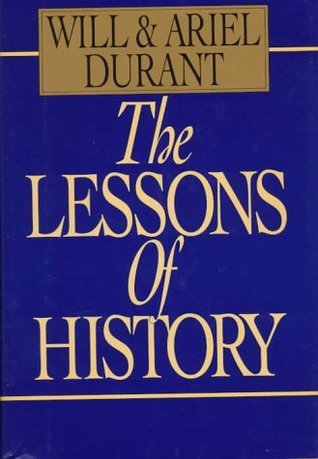
The Lessons of History
by Will & Ariel Durant
Distills thousands of years of human history into concise, actionable lessons on war, economics, and human nature.

The Silk Roads: A New History of the World
by Peter Frankopan
A deeply researched global history shifting focus to the East. It meticulously details how ancient trade networks shaped civilization.
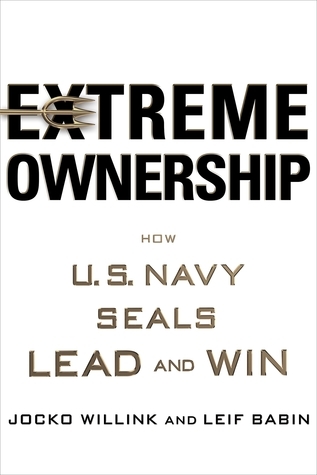
Extreme Ownership
by Jocko Willink and Leif Babin
Gripping combat stories from Navy SEALs translated into highly practical, no-nonsense leadership principles for your everyday life.